
AI Governance
AI Is Only as Powerful as the Governance Behind It.
Artificial intelligence has the power to transform organizations—but without the right governance, it can also introduce unnecessary risk.
Deploying AI responsibly requires far more than selecting the right technology. It requires clear policies, defined responsibilities, security guardrails, human oversight, workforce education, and continuous monitoring.
That’s where the AIR Department comes in.
We help organizations build the governance framework needed to confidently adopt AI while protecting their people, data, reputation, and mission.
Governance Before Automation
Many organizations begin their AI journey by experimenting with AI tools.
We believe organizations should begin with governance.
Before deploying AI agents, automating workflows, or integrating AI into business operations, organizations should answer important questions:
The AIR Department helps answer these questions before AI becomes part of your daily operations.

Our Governance Framework
Our governance model is built around five core pillars.
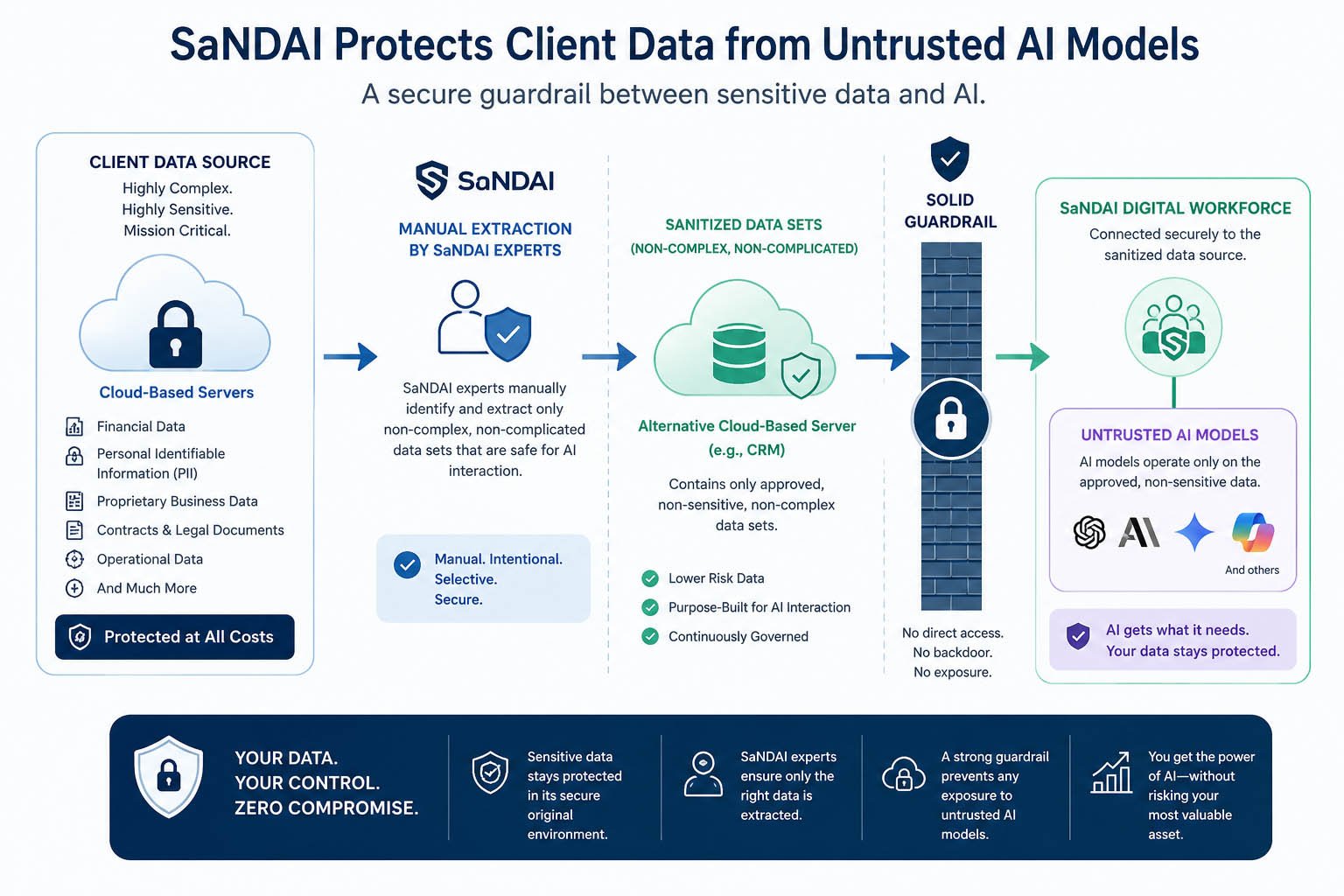
The Human-AI Trust Boundary
One of the AIR Department’s most important responsibilities is establishing a secure Human-AI Trust Boundary between your organization’s sensitive systems and artificial intelligence.
Rather than allowing AI to directly access confidential records, our architecture places a governed operational layer between your systems of record and your Digital Workforce.
This approach helps protect sensitive information while enabling AI agents to safely perform meaningful work.
Benefits include:
Human-AI Segregation of Duties (HA-SOD)
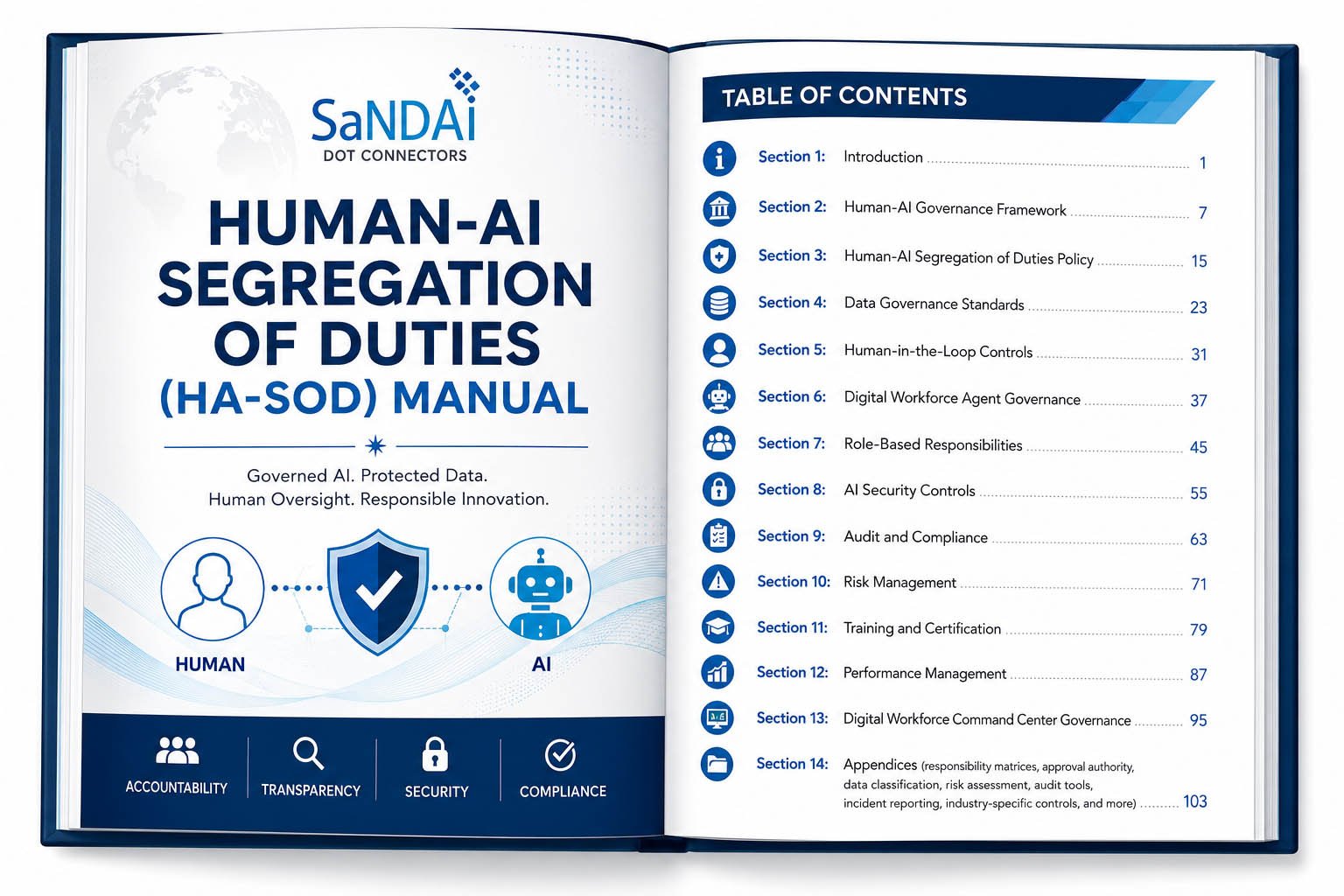
Just as financial systems separate responsibilities to reduce organizational risk, AI requires clearly defined responsibilities between people and intelligent systems.
Our Human-AI Segregation of Duties framework establishes:
Just as financial systems separate responsibilities to reduce organizational risk, AI requires clearly defined responsibilities between people and intelligent systems.
Our Human-AI Segregation of Duties framework establishes:
Every AI interaction operates within defined organizational guardrails.
AI Governance Isn’t a One-Time Activity
Technology changes.
Policies evolve.
Regulations advance.
Organizational priorities shift.
That’s why governance isn’t a document—it is an ongoing organizational capability.
Through the AIR Department we continuously monitor your AI environment, review policies, evaluate performance, identify emerging risks, and recommend improvements that keep your Digital Workforce aligned with your mission and organizational objectives.
What’s Included
Organizations partnering with the AIR Department receive governance resources that may include:
Why Governance Matters
Governance Creates Confidence
The purpose of governance isn’t to slow innovation.
It’s to make innovation sustainable.
When leadership, staff, boards, and stakeholders trust the systems supporting them, organizations are free to innovate with confidence.
That’s why governance is at the center of everything we do.

Governance Is the AIR Difference
Most organizations can purchase AI software.
Few have access to an experienced AI governance team.
The AIR Department combines executive leadership, governance expertise, policy development, workforce education, security, monitoring, and continuous oversight into one integrated capability that helps organizations adopt AI responsibly from day one.
Because successful AI isn’t measured by how much technology you deploy.
It’s measured by how responsibly—and confidently—you use it.
Ready to Govern AI with Confidence?
Discover how the AIR Department helps organizations establish the leadership, policies, security, and oversight needed to responsibly harness the power of artificial intelligence.